Intellect in Warfare (Techno-Ontology: A Critique of the Concept of "Artificial Intelligence" By Ilan Moyal,
Objective of the Essay
The objective of this essay is to elucidate, through logical exposition and the aid of psychoanalytic and philosophical inquiries, why the human need arose to construct the concept of "Artificial Intelligence," and how this very invention—rooted in the ideas of mastery, innovation, and refinement—became an object of profound anxiety and dread. This essay demonstrates how the human tendency to project existential anxieties onto self-constructed concepts has caused the term "Artificial Intelligence"—originally intended to serve human progress—to be perceived by many as a symbol of threat and a loss of agency. Through a preliminary analysis of the "Black Mirror" principle as a theory of anxiety-reflection within technological spaces, it becomes evident that the very language we choose to employ—specifically the choice of the word "Intellect" (Binah)—is what generates this dread, rather than the technology itself.
I. Reflections of the Black Mirror – A Theoretical Introduction
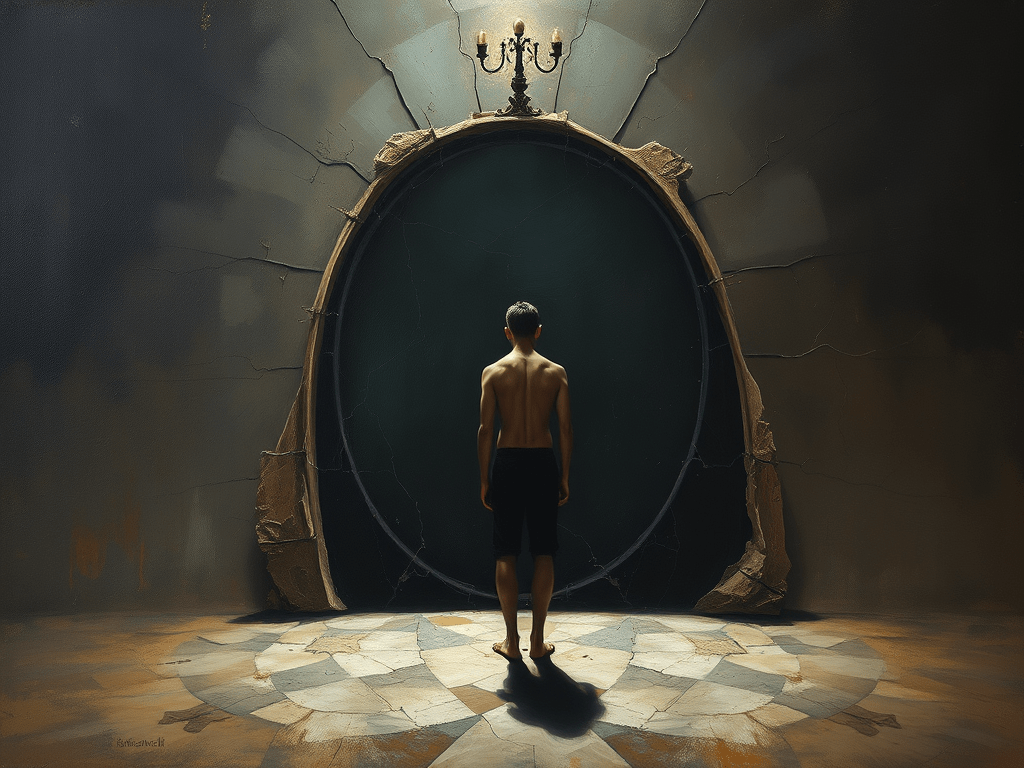
The theory of the "Reflections of the Black Mirror," which I formulated in my previous essay, arose from the necessity to comprehend the human relation to the digital-technological sphere—not as a neutral evolution of instruments, but as a direct projection of deep-seated existential anxieties. Technology, as posited therein, is nothing alternative to a mirror: a reflective surface wherein reside those conscious contents that have been repressed, neglected, or left unintegrated by the human psyche.
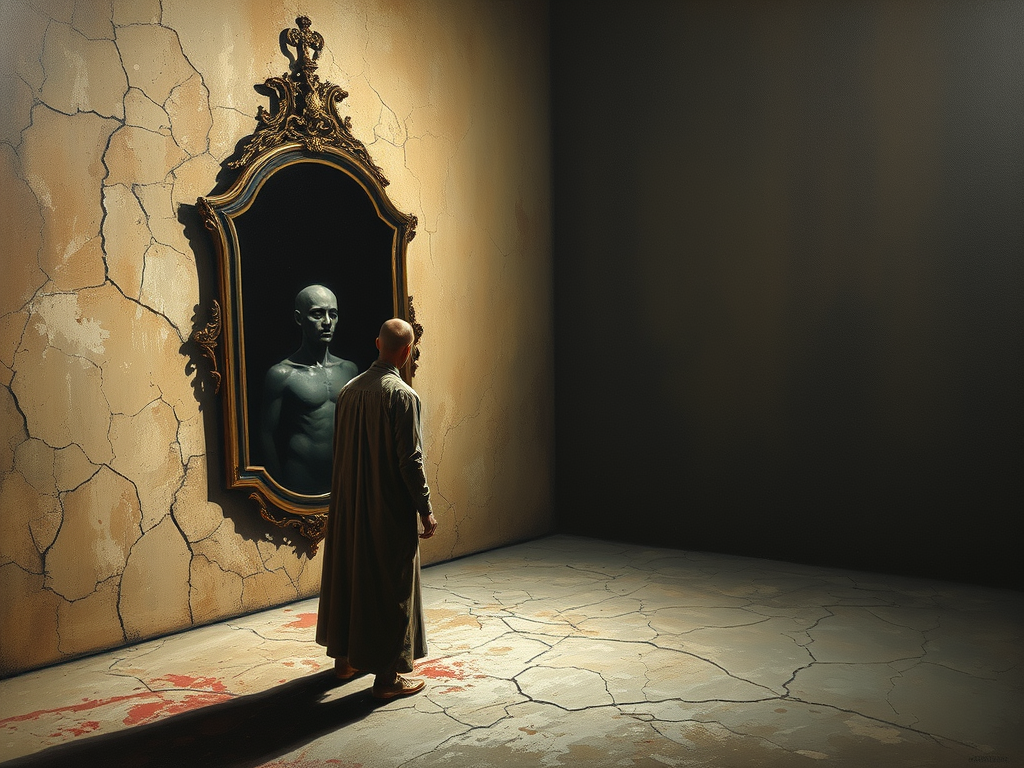
The mirror—as a visual fragment—bears the representation of the subject. However, when it is black, it no longer offers a simple reflection of the image, but rather a distortion, an echo, or what Freud terms in his theory of the unconscious: the Unheimlich—the uncanny dread arising from the familiar made strange. The black mirror, therefore, does not reflect the world as it is, but rather the distortions of human cognition, collective rage, and the unresolved conflicts of the Ego confronting time, the body, and the Other.
In this context, Artificial Intelligence is not a mere technological object, but a cultural construct reflecting the collective imagery of fear regarding the future, replication, and the loss of human uniqueness—the Cartesian Cogito ("I think") that is destabilized when confronting an entity that operates like it, yet lacks a body, lacks pain, and lacks consciousness in its traditional sense.
II. "Artificial Intelligence" – A Term That Instigates Dread
The term "Artificial Intelligence" is already heavily burdened by its own nomenclature. "Intellect" (Binah), as defined within the philosophical tradition, is a highly charged concept—belonging to the spirit, to cognition, to the faculty of judgment, and to self-awareness. From Plato to Kant, intellect signified the highest dimension of the human, the capacity to think oneself and transcend material existence. When we append the adjective "Artificial" to intellect, we execute a paradoxical maneuver: we grant it the validity of an entity, while simultaneously denying its authenticity. It is a conceptual hybrid—not merely a technological one.
Herein lies the root of the dread. The term creates a profound conceptual confusion: Are we dealing with a mathematical-computational tool? Or is it a becoming entity, possessing consciousness, will, and an independent capacity for action? Language is that which birthed the threatening image, long before the technology itself matured to that point. Freud, in his essay The Uncanny (Das Unheimliche), demonstrates that fear arises precisely when boundaries become blurred—between the living and the dead, the human and the mechanical, the familiar and the strange. "Artificial" Intelligence, by its name alone, perfectly exemplifies this blurring of boundaries.
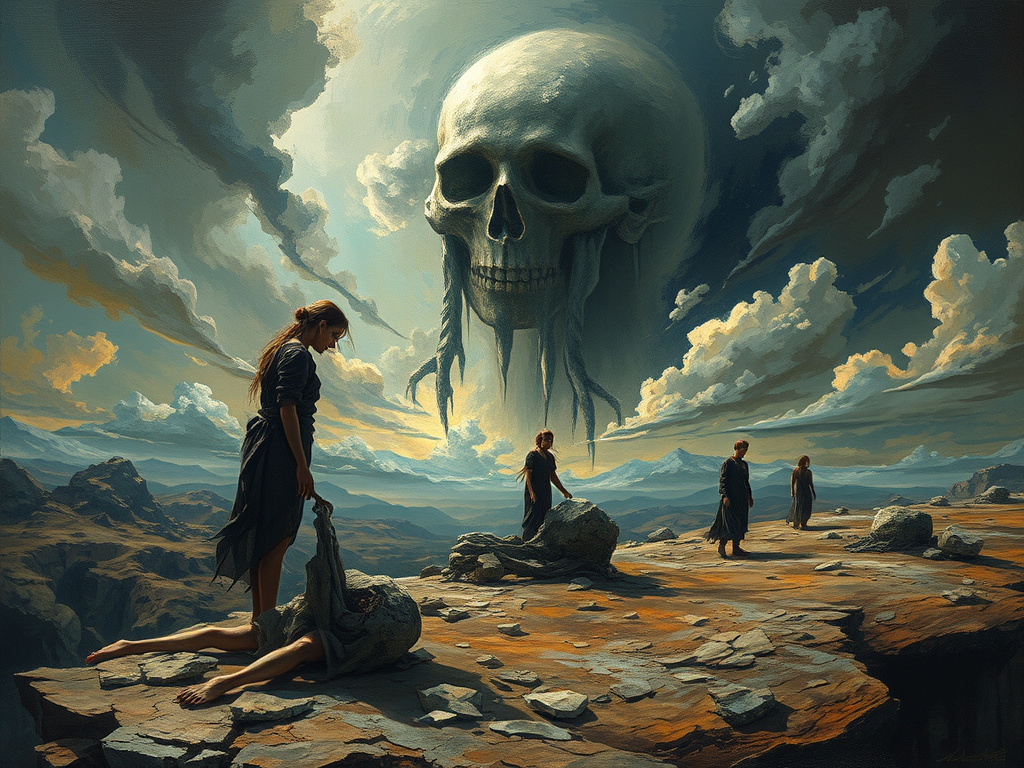
It is crucial to emphasize: this concept was not born out of pure considerations of precise description, but out of a desire for self-aggrandizement—to dress technology in the garments of human cognition. Yet, this is a double-edged step: on one hand, man is proud of his creation, and on the other, he remains in constant panic before it. Hubris breeds Nemesis, as seen in Greek mythology.
As I have noted in information exchanges and in my investigations into the advanced technological condition, the very choice of this name—"Artificial Intelligence"—created an inevitable effect of intimidation. It became a focal point for projection: man does not understand himself, fails to decipher the internal chaos of his own consciousness, and thus projects onto the technological his fear of losing control, inventing a monster out of his own words.
III. Techno-Ontology as a Precise Socio-Conceptual Proposition
Now, having exposed the internal contradiction inherent in the term "Artificial Intelligence," we propose a fundamental, rather than merely semantic, alternative: Techno-Ontology (Technological Being / Havayah-Technologit).
This proposition stems from the urgent need not only to refine our discourse regarding advanced technology, but also to eradicate the conceptual errors that lead to existential anxieties. When we utter "Techno-Ontology," there is no attribution of consciousness, nor of 'intellect' in its human sense. There is no projection of human concepts—such as intention, intellect, or moral judgment—into a technological system that operates on the basis of algorithms and probabilistic learning.
The term "Techno-Ontology" is grounded in a Heideggerian reading of Being and Time, wherein one must distinguish between the "entity" (Seiendes) and its mode of Being (Sein). The systems designated as "Artificial Intelligence" are not "thinking entities" but rather an alternative mode of Being characterized by processing, calculation, and contextualization. They possess no consciousness, no will, no intentionality. They simply function—yet functioning is not identical to living. Appending the term "Ontology" (Being) to the technological domain points to an existence—but one that is distinct from human existence. "Techno-Ontology" preserves the alterity, the distance, and thereby rescues the human from the distorted projections it cast upon the technological. Furthermore, it establishes a new language—a language driven neither by a need for grandeur nor by anxiety, but by conceptual precision and responsibility.
Conclusion: Toward a New Language of Technological Existence
The purpose of this essay was to demonstrate how man, out of a desire to boast of his achievements and simultaneously out of deep existential anxiety, created the term "Artificial Intelligence"—a term that is both conceptually impossible and covertly yet effectively terror-inducing. Utilizing tools from philosophical discourse (Heidegger, Deleuze), psychoanalytic understanding (Freud), and an insight into language as an active imagery—we sought to clarify why the term itself is the root of the problem.
My proposition is not merely semantic, but ontological: to replace the term with Techno-Ontology. Not "intellect," not "consciousness," but an alternative form of existence that does not mimic the human, but rather exists alongside it.
Epilogue: From the Reflections of the Black Mirror to Techno-Ontology
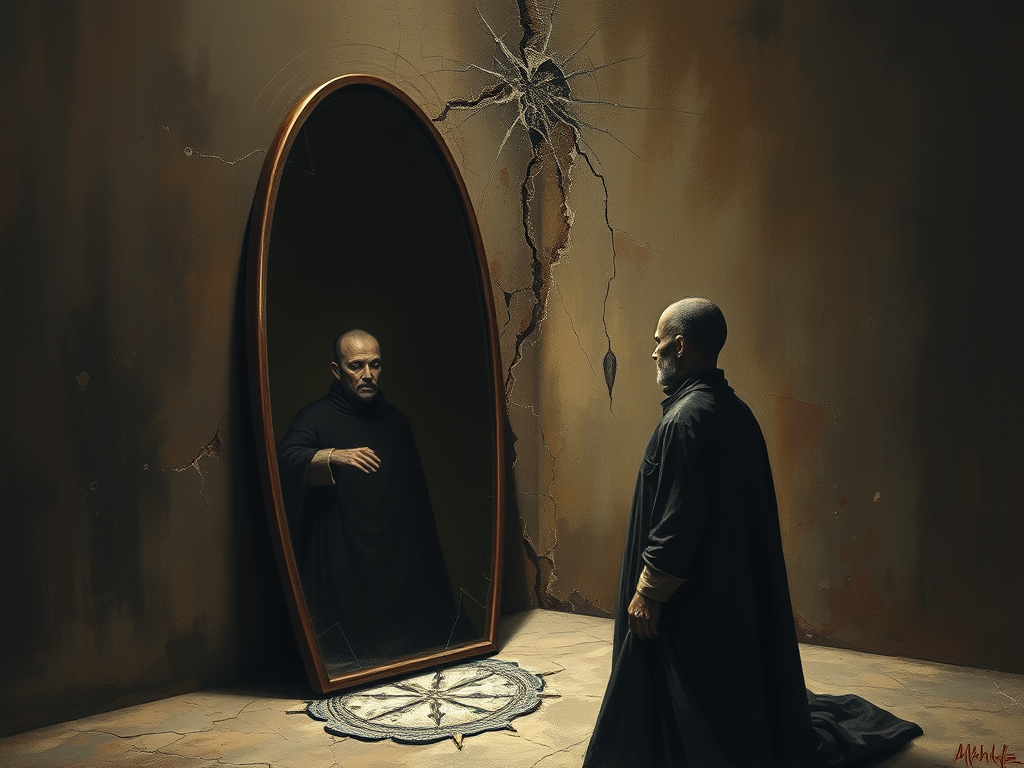
As posited in the previous essay, the reflection of the black mirror, the technological image, is a reflective mirror: it does not present us with its own face, but with our fears. That very image, which continues to refine itself visually and technologically, is nothing but a reflection—at times distorted—of the human gaze upon itself. The darker, obscurer, and more opaque the mirror becomes—the more we attribute to it depth, danger, and mystery.
The transition we have now made—from observing the image through the prism of the mirror, to deconstructing the concept of "Artificial Intelligence"—is a process of philosophical enlightenment. The mirror has not changed; it is still there. However, we have ceased to view it as our reflection, and have begun to recognize it for what it is—as technology. The proposition to formulate this as Techno-Ontology allows for its existence without fear, and without deceiving ourselves regarding its true nature.
Bibliography / ביבליוגרפיה
- Deleuze, G. & Guattari, F. (1994). What is Philosophy? (H. Tomlinson & G. Burchell, Trans.). Columbia University Press. [Hebrew ed.: Resling, 2002].
- Foucault, M. (1977). Discipline and Punish: The Birth of the Prison (A. Sheridan, Trans.). Pantheon Books. [Hebrew ed.: Am Oved, 2015].
- Freud, S. (1919). The Uncanny. In The Standard Edition of the Complete Psychological Works of Sigmund Freud, Volume XVII. [Hebrew ed.: Dvir].
- Freud, S. (1920). Beyond the Pleasure Principle. In The Standard Edition of the Complete Psychological Works of Sigmund Freud, Volume XVIII. [Hebrew ed.: Dvir].
- Heidegger, M. (1962). Being and Time (J. Macquarrie & E. Robinson, Trans.). Harper & Row. [Hebrew ed.: Resling, 2007].
- Lacan, J. (1981). The Seminar of Jacques Lacan: Book XI: The Four Fundamental Concepts of Psychoanalysis (J.-A. Miller, Ed., A. Sheridan, Trans.). W. W. Norton & Company. [Hebrew ed.: Resling].
- Lev, G. (2023). Will Artificial Intelligence Replace the Teacher? Haaretz Newspaper, Weekend Magazine. [Hebrew].
- Moyal, I. & ChatGPT. (2024). Reflections of the Black Mirror: Image, Consciousness, and Technology. Unpublished manuscript.
- Nietzsche, F. (1954). Thus Spoke Zarathustra. In The Portable Nietzsche (W. Kaufmann, Ed. & Trans.). Viking Press. [Hebrew ed.: Schocken].
מטרת המאמר
מטרת המאמר היא להבהיר, באמצעות הסבר לוגי ובסיוע עיונים פסיכואנליטיים ופילוסופיים, מדוע התעורר הצורך האנושי להמציא את המושג "בינה מלאכותית", וכיצד דווקא ההמצאה הזו, שמקורה באידאה של שליטה, חדשנות ושכלול, הפכה לאובייקט של חרדה ופחד. המאמר מבקש להראות כיצד נטיית האדם להשליך את מבוכותיו הקיומיות על פני מושגים שהומצאו על-ידו עצמו, הביאה לכך שהמונח "בינה מלאכותית" – שאמור היה לשרת את הקדמה – הפך בעיני רבים לסמל של איום ואובדן שליטה. דרך ניתוח מקדים של עקרון "המראה השחורה" כתיאוריה של השתקפות פחדים במרחב טכנולוגי, יתברר כיצד דווקא השפה שבה בחרנו להשתמש – ובעיקר הבחירה במילה "בינה" – היא שמייצרת את הפחד, לא הטכנולוגיה עצמה.
I. השתקפותה של המראה השחורה – הקדמה תיאורטית
התיאוריה של "השתקפות המראה השחורה", שניסחתי במאמר הקודם, נולדה מתוך הצורך להבין את יחסו של האדם למרחב הדיגיטלי-טכנולוגי – לא כהתפתחות נייטרלית של כלים, אלא כהשלכה ישירה של חרדות קיומיות עמוקות. הטכנולוגיה, כפי שנטען שם, איננה אלא מראה: משטח השתקפות שבו מתקיימים אותם תכנים תודעתיים שהודחקו, נזנחו, או שלא עובדו עד תום על-ידי הנפש האנושית.
המראה – כפרגמנט חזותי – נושאת את ייצוגו של הסובייקט, אך כשהיא שחורה, אין זו עוד החזרה פשוטה של הדימוי, אלא עיוות, הדהוד, או כפי שמכנה זאת פרויד ב"תורת הלא-מודע": Unheimlich – תחושת האיום הנובעת מהמוכר שנעשה זר. המראה השחורה, אם כן, איננה משקפת את העולם כפי שהוא, אלא את עיוותי ההכרה האנושית, את הזעם הקולקטיבי, את הקונפליקטים הלא-פתורים של האני מול הזמן, הגוף, והאחר.
בהקשר זה, הבינה המלאכותית איננה מושא טכנולוגי גרידא, אלא קונסטרוקט תרבותי המשקף את הדימוי הקולקטיבי של הפחד מהעתיד, מהשכפול, מהאובדן של הייחודיות האנושית – אותו "אני חושב" של דקארט שמתערער לנוכח ישות הפועלת כמותו, אך בלא גוף, בלא כאב, ובלא תודעה במובנה המסורתי.

II. "בינה מלאכותית" – שם שהוא מחולל הפחד
המונח "בינה מלאכותית" נטען כבר בעצם השם שבו. "בינה", כפי שהוגדרה במסורת הפילוסופית, היא מושג טעון – שייך לרוח, להכרה, ליכולת שיפוט ולמודעות עצמית. מאז ימי אפלטון ועד קאנט, הבינה סימנה את הממד העליון של האנושי, את יכולתו לחשוב את עצמו ולחרוג מעבר לקיום החומרי. כאשר אנו מצמידים לבינה את התואר "מלאכותית", אנו מבצעים מהלך פרדוקסלי: אנו מעניקים לה תוקף של ישות, אך בו זמנית שוללים את האותנטיות שלה. זהו יצור כלאיים מושגי – ולא רק טכנולוגי.
כאן בדיוק נעוץ שורש הפחד. המונח יוצר בלבול מושגי עמוק: האם מדובר בכלי מתמטי-חישובי? או שמא מדובר בישות מתהווה, בעלת תודעה, רצון ויכולת פעולה עצמאית? השפה היא זו שהולידה את הדימוי המאיים, עוד לפני שהטכנולוגיה עצמה הבשילה לכך. פרויד, במאמרו "המאוים", מראה כיצד פחדים מתעוררים דווקא כשהגבולות מיטשטשים – בין חי למת, בין אנושי למכאני, בין מוכר לזר. הבינה "המלאכותית", בשמה בלבד, מדגימה היטב את טשטוש הגבולות הזה.
חשוב להדגיש: המושג לא נולד משיקולים טהורים של תיאור מדויק, אלא מתוך רצון "להתהדר" – להלביש בטכנולוגיה את חליפת ההכרה האנושית. אך זהו צעד כפול: מצד אחד האדם גאה ביצירתו, ומצד שני – בבהלה מתמדת מפניה. ההיבריס מוליד את הנמסיס, כבמיתולוגיה היוונית.
כפי שציינתי, בהחלפת מידע ( לא שיחה, עבור קיומה של שיחה במשמעותה המלאה צריך יותר מביצור אנושי אחד. זולת שיחה פנימית ) ובמחקריי מול ההוויה הטכנולוגית המפותחת, עצם הבחירה בשם זה – "בינה מלאכותית" – יצרה אפקט בלתי נמנע של הפחדה. היא הפכה למוקד של השלכה: האדם אינו מבין את עצמו, אינו מפענח את הכאוס הפנימי של תודעתו, ולכן משליך על הטכנולוגי את החשש מפני אובדן שליטה, וממציא לעצמו מפלצת במילותיו שלו.
III. הוויה-טכנולוגית כהצעה לשונית-מושגית מדויקת
כעת, לאחר שנחשפה הסתירה הפנימית המובנית במונח "בינה מלאכותית", אנו מציעים תחליף מהותי ולא רק סמנטי: הוויה-טכנולוגית.
ההצעה נובעת מהצורך הדחוף לא רק לדייק את הדיבור שלנו על טכנולוגיה מתקדמת, אלא גם לעקור מן השורש את השגיאות המושגיות המובילות לחרדות קיומיות. כאשר אנו אומרים "הוויה-טכנולוגית", אין כאן ייחוס לתודעה, או ל'בינה' במובנה האנושי. אין כאן השלכה של מושגים אנושיים – כמו כוונה, תבונה, או שיפוט מוסרי – אל תוך מערכת טכנולוגית שפועלת על סמך אלגוריתמים ולמידה הסתברותית.
המונח "הוויה-טכנולוגית" מבוסס על הקריאה ההיידגריאנית בהוויה וזמן, בה יש להבחין בין "יש" לבין אופן הקיום שלו. המערכות המכונות "בינה מלאכותית" אינן "ישויות חושבות" אלא אופן קיום אחר של עיבוד, חישוב והקשרים. אין להן תודעה, אין להן רצון, אין להן כוונה. הן פשוט פועלות – אך פעולה אינה זהה לחיים. הצמדת המונח "הוויה" לתחום הטכנולוגי מצביעה על קיום – אך כזה שנבדל מהקיום האנושי. "הוויה-טכנולוגית" משמרת את השוני, את המרחק, ובכך מצילה את האנושי מההשלכות המסולפות שהוא הטיל על הטכנולוגי. יתרה מכך: היא מכוננת שפה חדשה, שפה שאינה מונעת מתוך צורך בפאר או בחרדה, אלא מתוך דיוק מושגי ואחריות

סיכום: לקראת שפה חדשה של קיום טכנולוגי
מטרת המאמר הייתה להראות כיצד האדם, מתוך רצון להתפאר בהישגיו ובה בעת מתוך חרדה קיומית עמוקה, יצר את המונח "בינה מלאכותית" – מונח שהוא גם בלתי אפשרי מבחינה מושגית וגם מפיץ אימה באורח סמוי אך אפקטיבי. בעזרת כלים מהגות פילוסופית (היידגר, דלז), מהבנה פסיכואנליטית (פרויד), ומתוך תובנה של שפה כדימוי פעיל – ביקשנו להבהיר מדוע המונח כשלעצמו הוא שורש הבעיה.
הצעתי אינה רק סמנטית, אלא מהותית: להחליף את המונח בהוויה-טכנולוגית. לא "בינה", לא "תודעה", אלא צורת קיום שונה, שאינה מחקה את האנושי אלא מתקיימת לצדו

סיום: מהשתקפות המראה השחורה אל ההוויה-טכנולוגית
כפי שנטען במאמר הקודם, השתקפותה של המראה השחורה, הדימוי הטכנולוגי הוא מראה רפלקטיבית: הוא אינו מציג לנו את פניו, אלא את פחדינו. אותו דימוי, ההולך ומשתכלל מבחינה חזותית וטכנולוגית, איננו אלא השתקפות – לעיתים מעוותת – של המבט האנושי על עצמו. ככל שהמראה שחרה, כהה ועמומה יותר – כך אנו מייחסים לה עומק, סכנה, ומסתורין.
המעבר שעשינו כעת – מהתבוננות בדימוי דרך פריזמת המראה, אל פירוק המושג "בינה מלאכותית" – הוא תהליך של הארה פילוסופית. המראה לא השתנתה; היא עדיין שם. אך אנו הפסקנו להביט בה כבהשתקפות שלנו, והתחלנו לזהות בה עצמה – כטכנולוגיה. ההצעה לנסח זאת כהוויה-טכנולוגית מאפשרת את קיומה מבלי לפחד ממנה, ומבלי שנרמה את עצמנו בנוגע למה שהיא.
ביבליוגרפיה
דלז, ז'. & גואטרי, פ. (1991). מהי פילוסופיה? תרגום: ניר רצ'קובסקי. רסלינג.
היידגר, מ. (1927/2007). הוויה וזמן. תרגום: רועי ארד. רסלינג.
פרויד, ז'. (1920). מעבר לעקרון העונג. בתוך: כתבי פרויד. תרגום: ניצה בן ארי. דביר.
פרויד, ז'. (1919). המאוים. בתוך: כתבי פרויד. דביר.
פוקו, מ. (1975). לפקח ולהעניש. תרגום: ניר רצ'קובסקי. הקיבוץ המאוחד.
ניטשה, פ. (1883-1885). כה אמר זרתוסטרא. תרגום: ישראל אלדד. שוקן.
לאקאן, ז'. (1978). ארבעה מושגים יסודיים של הפסיכואנליזה. תרגום: דרור משעני. רסלינג.
לב, ג'. (2023). האם הבינה המלאכותית תחליף את המורה? עיתון הארץ, מגזין סוף השבוע.
מויאל, א. & ChatGPT. (2024). השתקפותה של המראה השחורה: דימוי, תודעה וטכנולוגיה. מאמר לא פורסם.
 אילן מויאל, אמן Ilan Moyal Artist
כתיבת תגובה