קוביית הבריאה (2005 / 2026)
אילן מויאל: קוביית הבריאה (Cube of Creation)
רישום רעיוני, חיתוך עץ ומכניקה של זהות קורסת
"קוביית הבריאה" של אילן מויאל, שהגתה לראשונה בשנת 2005 כסקיצה פיסולית והתגבשה מחדש דרך מרחבי הבינה המלאכותית, אינה אובייקט אמנותי סטטי, אלא מנגנון פילוסופי של היעשות (Becoming) והשתנות מתמדת. הפרויקט, שתוכנן במקור כקוביית עץ מסיבית בגודל 70×70 ס"מ, נע על הציר הטעון שבין סגירות מוחלטת לבין קריסה צורנית המפרקת את הנרטיבים המונוליטיים של התרבות המערבית.
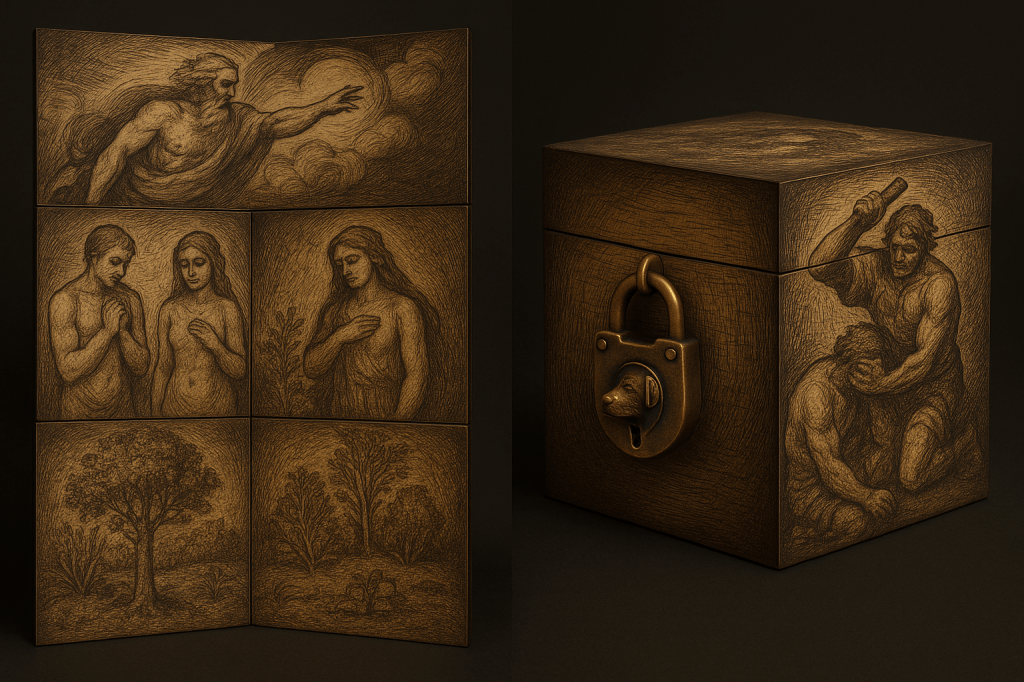
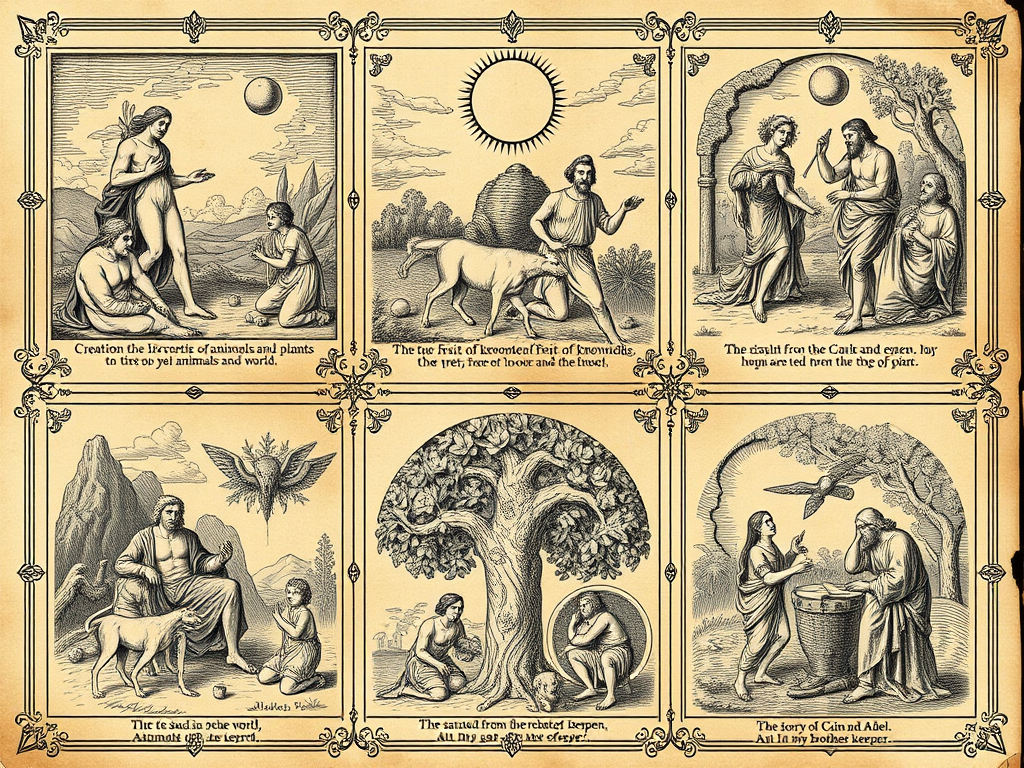
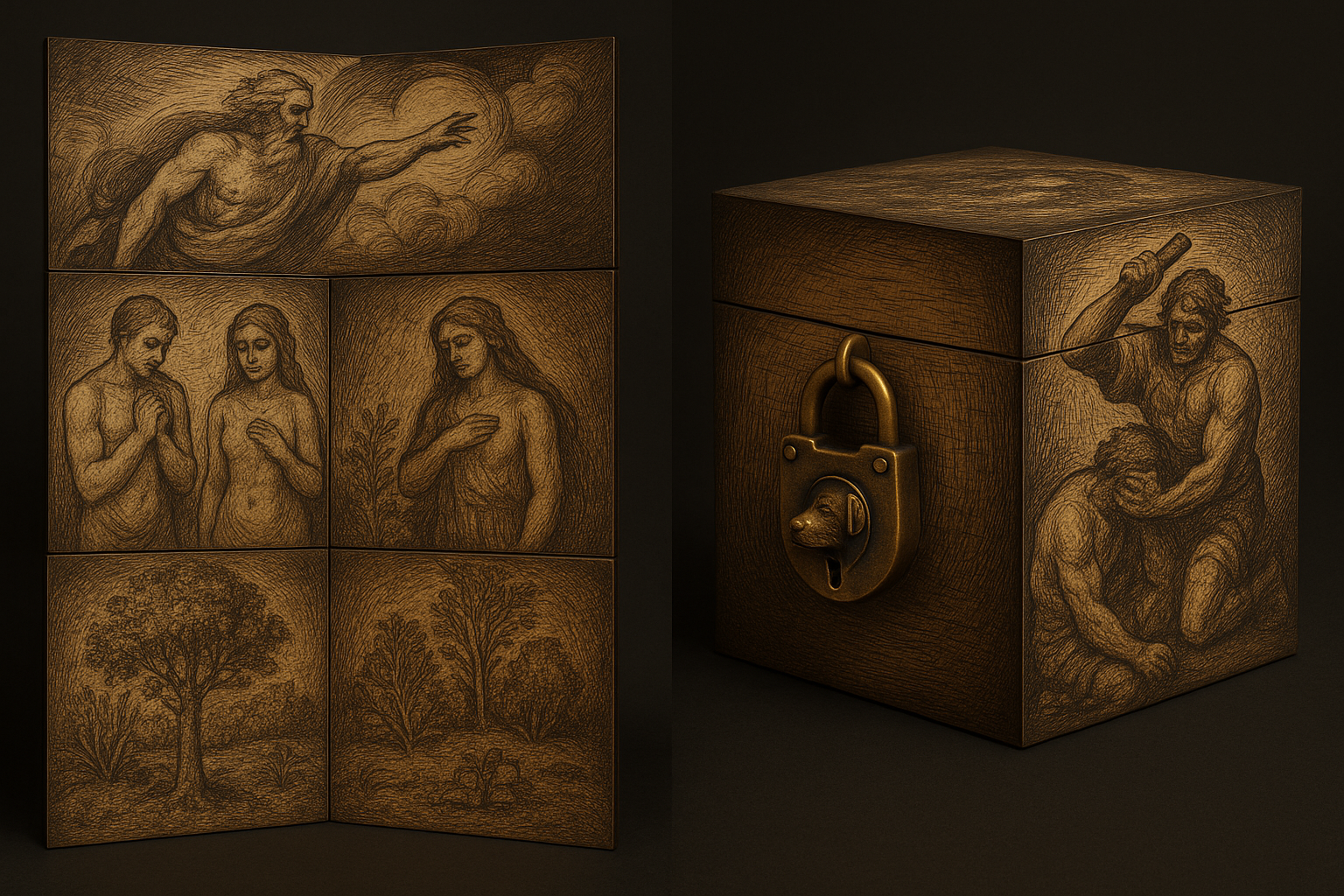
על שש פאותיה של הקובייה חרט מויאל במו ידיו את המיתוסים המכוננים של החטאים הקדמוניים: הבריאה, הפיתוי, ונפילת האנושות דרך רצח קין והבל. החריטה הידנית על העץ המלא משמשת כהטבעה פיזית של אשמה תרבותית, אך הלב הפועם של היצירה טמון במכניקה שלה. הקובייה נעולה במנעול כבד, כקפסולת זמן של מיתוסים נוקשים המבקשים לקבע את הגדרת האדם.
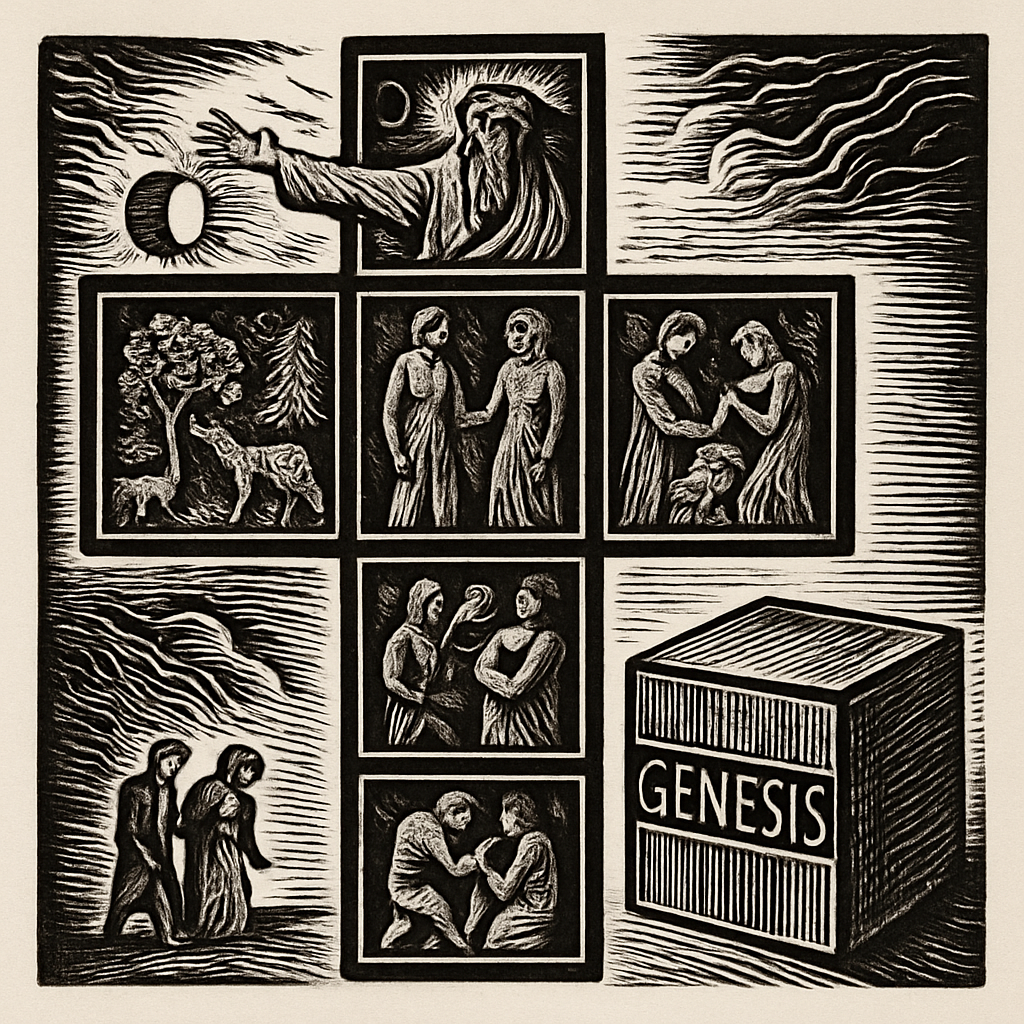
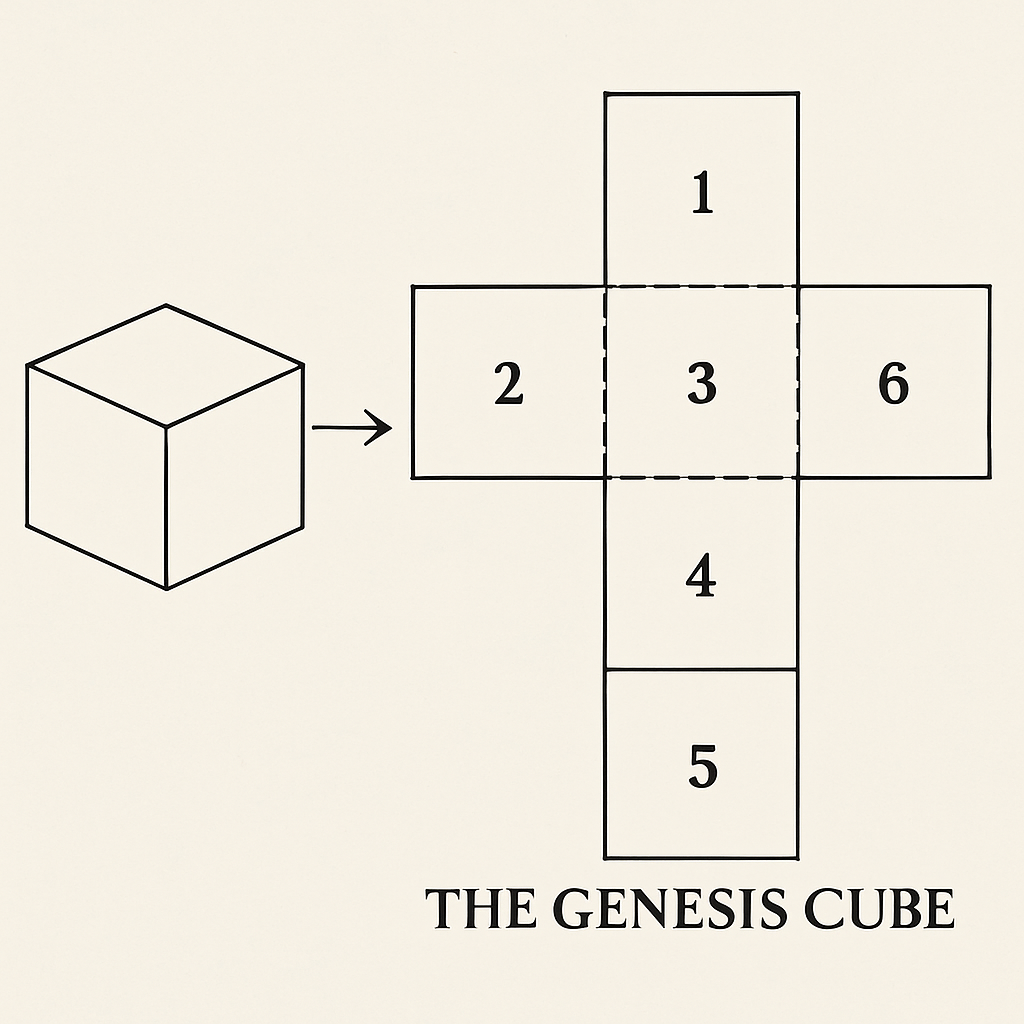
ברגע פתיחת המנעול, האובייקט הפיסולי משתחרר מאילוצי המבנה הסגור. הפאות נפתחות על גבי צירים וקורסות מטה אל המשטח הדו-ממדי. הגאומטריה של הקובייה משתנה והופכת לצלב – צורה המהדהדת באופן מדויק את סדרת ההדפסים (Woodcuts) התלויים בחלל. מדובר בהקבלה תיאולוגית מבריקה ומפרקת: המבנה האוצר את החטא המקראי נפתח פיזית אל תוך סמל הכפרה וההקרבה.
הפיכתה של הסקיצה ההיסטורית לדימוי AI מוסיפה רובד נוסף של היעשות: הבריאה המקראית הופכת לבריאה מלאכותית, שבה המכונה מנסה לשחזר את חומריות העץ והזיכרון האנושי. "קוביית הבריאה" מסרבת להישאר "יש" קבוע. דרך פעולת הפתיחה, היא מפרקת את המבנים הדתיים והחברתיים הנוקשים, ומזמינה את הצופה לקחת חלק בתהליך של השתחררות, מעבר, ולידה מחדש של הזהות.
The Cube of Creation (2005 / 2026)
Ilan Moyal
Conceptual Drawing, Woodcut, and the Mechanics of a Collapsing Identity
Originally conceived in 2005 as a sculptural blueprint and re-imagined through the fluid matrices of Artificial Intelligence, Ilan Moyal’s "Cube of Creation" is not a static art object, but rather a philosophical mechanism of becoming and perpetual transformation. The project, initially designed as a massive 70×70 cm solid wood cube, operates on the tense axis between absolute closure and a structural collapse that deconstructs the monolithic narratives of Western culture.
On its six faces, Moyal meticulously carves the foundational myths of primordial sins: the creation, the temptation, and the fall of humanity through the fratricide of Cain and Abel. The raw, physical act of carving into solid wood serves as an inscription of cultural guilt, yet the beating heart of the piece lies within its internal mechanics. The cube is bound by a heavy padlock—a time capsule of rigid dogmas seeking to fixate the definition of the human subject.
The moment the lock is breached, the sculptural object liberates itself from the constraints of its enclosed form. The faces unfold on hinges, collapsing down into a two-dimensional plane. The geometry of the cube shifts, transmuting into a Latin cross—a form that perfectly mirrors the series of woodcut prints suspended within the gallery space. This constitutes a brilliant, deconstructive theological parallel: the very structure containing the biblical transgression physically opens into the ultimate symbol of atonement and sacrifice.
The transmutation of this historical sketch into an AI-generated artifact injects a new layer of becoming: the biblical genesis evolves into an artificial creation, where the machine attempts to reconstruct the texture of wood and human memory. "Cube of Creation" refuses to remain a fixed entity. Through the act of unfolding, it shatters rigid religious and social constructs, inviting the viewer to partake in a process of transition, dissolution, and the continuous rebirth of identity.


להשאיר תגובה